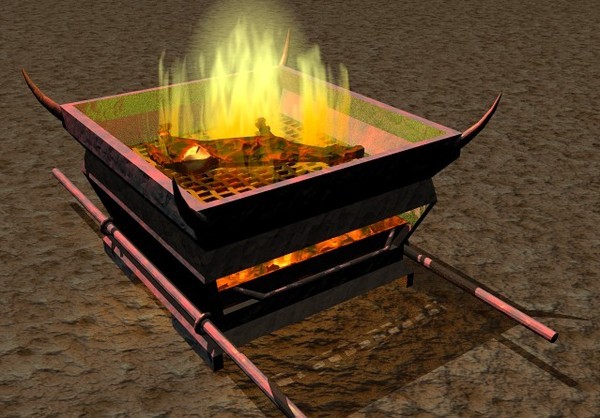
An Offering made by fire (Lev 23:18, 37 were very common in ancient Yashar'el and as such, the first chapter of the book of Leviticus outlines the logistics for them:
“And Yahuah called unto Moshe, and spake unto him out of the tabernacle of the congregation, saying,
Speak unto the children of Yashar'el, and say unto them, If any man of you bring an offering unto Yahuah, ye shall bring your offering of the cattle, even of the herd, and of the flock.
(Cattle and livestock were used in that day for all manner of commerce and covenants, promises, and oaths.)
If his offering be a burnt sacrifice of the herd, let him offer a male without blemish: he shall offer it OF HIS OWN VOLUNTARY WILL at the door of the tabernacle of the congregation before Yahuah.
And he shall put his hand upon the head of the burnt offering; and it shall be accepted for him to make atonement for him.
And he shall kill the bullock before Yahuah: and the priests, Aaron's sons, shall bring the blood, and sprinkle the blood round about upon the altar that is by the door of the tabernacle of the congregation.
And he shall flay the burnt offering, and cut it into his pieces.
And the sons of Aaron the priest shall put fire upon the altar, and lay the wood in order upon the fire:
And the priests, Aaron's sons, shall lay the parts, the head, and the fat, in order upon the wood that is on the fire which is upon the altar:
But his inwards and his legs shall he wash in water: and the priest shall burn all on the altar, to be a burnt sacrifice, an offering made by fire, of a sweet savour unto Yahuah.” (Lev 1:1-9 ).
There are five types of offerings introduced in the opening pages of Leviticus:
'Olah (Burnt Offering) – Lev 1:1-17
Minchah (Grain Offering) – Lev 2:1-16
Sh’lamim (Peace Offering) – Lev 3:1-17
Chata’at (Sin Offering) – Lev 4:1-35; 5:1-13
‘Asham (Guilt Offering) – Lev 5:14-26
Important by comparison is that the first three could easily be considered “freewill offerings,” brought before Elohim by anyone at various times in the life of anyone in the community, and they did not address atonement for ritual sins.
This means, since they did not atone for sins of the flesh (the kind that stained the Sanctuary of Elohim), they could essentially be brought as an expression of the thankfulness of an individual.
The last two, however, were required to make restitution for various sins in the flesh (ritual sins). Such offerings (chata’at and ’asham) are referred to as “expiatory.”
In conclusion, we know that our Elohim was pleased with worshippers bringing burnt offerings, because the burnt offering (fire offering) was completely burnt up on the altar (completely offered to Elohim, with nothing eaten by the worshipper) and the result was said to be “re’ach nichoach la’ADONAI” (Hebrew=רֵֽיחַ־נִיחֹוחַ לַֽיהוָֽה), that is, “a pleasing aroma to Yahuah).
And now .. in Messiah Yahusha ... where does HE state the same words of "well pleased?"
Hebrews 13:16 "But to do good and to communicate forget not: for with such sacrifices Elohim is well pleased."
2 Corinthians 9:7 "Every man according as he purposeth in his heart, so let him give; not grudgingly, or of necessity: for Elohim loveth a cheerful giver."
For those who come of their own free will, choosing to Honor Yahuah Elohim ... with such offerings made by FIRE is HE well pleased.







Beth Thornton
تبصرہ حذف کریں۔
کیا آپ واقعی اس تبصرہ کو حذف کرنا چاہتے ہیں؟
YahsChild
تبصرہ حذف کریں۔
کیا آپ واقعی اس تبصرہ کو حذف کرنا چاہتے ہیں؟